Seminarios en el CIBION
Seminario: Sastia Prama Putri - Jueves 25 de junio 11:00 hs
Osaka University
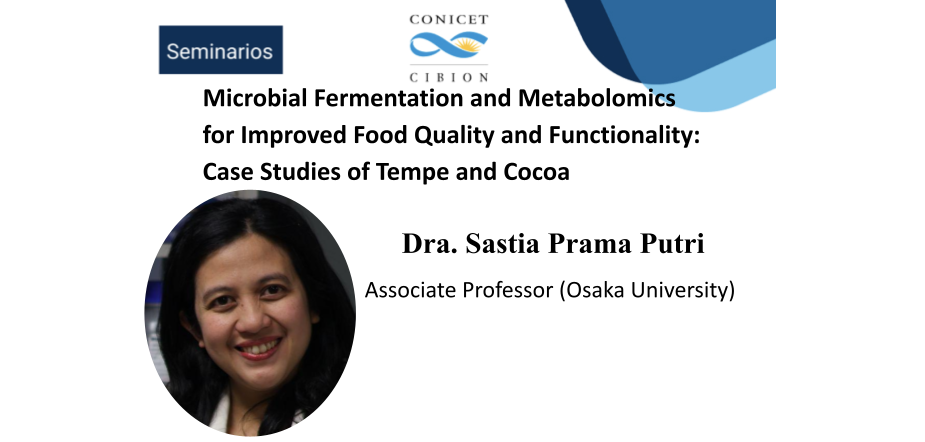
Microbial Fermentation and Metabolomics for Improved Food Quality and Functionality: Case Studies of Tempe and Cocoa
Microbial fermentation plays a crucial role in improving food quality, functionality, and consumer acceptance through the transformation of metabolites that influence nutritional value, bioactivity, and sensory characteristics. Recent advances in metabolomics provide powerful tools to comprehensively characterize these biochemical changes and identify key metabolites associated with desirable quality attributes. This presentation highlights the application of microbial fermentation and metabolomics through two representative case studies: tempe and cocoa. In tempe production, metabolomics-based investigations using gas chromatography–mass spectrometry (GC–MS) demonstrated that microbial intervention during the soybean soaking step significantly altered the metabolome, resulting in increased levels of amino acids, organic acids, and bioactive compounds. The introduction of beneficial microorganisms such as Lactiplantibacillus plantarum enhanced metabolite diversity, reduced sugar contents, and improved the functional properties of the final fermented product, demonstrating the potential of fermentation strategies to enhance the nutritional quality of plant-based foods. In cocoa processing, metabolomics revealed how fermentation-associated postharvest interventions modulate flavor development and quality. Studies evaluating pre-drying and mechanical de-pulping treatments showed significant changes in both volatile and non-volatile metabolites throughout fermentation and subsequent processing stages. Pre-drying increased important flavor precursors, including organic acids and reducing sugars, leading to improved fresh-fruit and acidity sensory attributes while reducing bitterness and astringency. In contrast, mechanical de-pulping promoted the accumulation of compounds associated with bitterness and less desirable flavor profiles. Integrated metabolomic and sensory analyses identified key quality markers, including citric acid, malic acid, catechin, epicatechin, and aroma-related metabolites that contribute to cocoa flavor formation. These case studies demonstrate that combining microbial fermentation with metabolomics enables a deeper understanding of food biochemical transformations and supports the development of innovative strategies to enhance nutritional functionality, sensory quality, and overall value of fermented foods.